Today, the ‘dupe’ is rarely a straightforward counterfeit. Instead, it is something more commercially sophisticated: a product designed to evoke the market leader closely enough to capture its appeal, but differentiated enough that consumers (may) understand they are buying a cheaper alternative and not the real thing.
While counterfeits fit comfortably within the traditional language of deception, confusion and false association, ‘dupes’ often do not. This disconnect makes the legal options more challenging. In many cases, the consumer is not misled at all in the conventional sense. They know they are not buying the premium serum, the iconic homewares piece or the well-known snack brand. They are buying something that is intended to feel ‘like’ or ‘close enough’.
That shift has exposed an uncomfortable truth for brand owners: Australian law does not prohibit copying in the abstract. It does not recognise a free-standing right in a product’s ‘vibe’, ‘look and feel’ or market position. And in a market increasingly comfortable with lookalikes, the instinctive claims - passing off and misleading or deceptive conduct under the Australian Consumer Law (ACL) - may not always do the work the owners of iconic products subject to imitation hope they will.
But that does not mean copycat products are beyond reach. In addition to considering the applicability of passing off and consumer law based claims, the key analysis for businesses seeking to protect iconic and important products is consideration of what the law actually protects, such as a badge of origin, a registered right, or a substantial part of original creative expression, and whether the dupe has taken one of those valuable rights.
Recent Australian cases illustrate both sides of that divide. On one hand, courts remain reluctant to equate deliberate copying with actionable deception. On the other, where the alleged dupe reproduces specific protectable subject matter- particularly original packaging artwork or other copyright works - the position may look very different. We examine the legal landscape surrounding modern product dupes in Australia through the lens of recent Federal Court decisions which illustrate both the limits and the possibilities of enforcement against commercially sophisticated product imitation.
The rise of the ‘lawful-ish’ dupe
‘Dupe culture’ is now a mainstream retail phenomenon. Beauty products, fashion, homewares, food and FMCG products are increasingly marketed – or at least consumed – in a way that invites comparison with a better-known premium product. The commercial strategy is clear: capture the aesthetic and market appeal of the original, while trying to avoid the legal and commercial consequences of outright counterfeiting.
For example, in the recent Federal Court decisions in Hampden Holdings IP Pty Ltd v Aldi Foods Pty Ltd [2024] FCA 1452 (Hampden), Aldi’s practice of “benchmarking” against competitors was exposed and offers a clear illustration of this type of commercial strategy. Moshinsky J found that Aldi used the expression “benchmarking” to refer to “a process of developing a packaging design that resembled the packaging of the benchmark product, albeit not too closely” (at [128]). The design agency instructed by Aldi to redesign its MAMIA children’s food packaging was directed to use the market leader’s LITTLE BELLIES brand as the “benchmark” and to “follow the architecture of Baby Bellies” (at [87]-[88]). This demonstrates the modern dupe supply strategy – a deliberate, documented process of competitive emulation calibrated to stay just inside the line.
This strategy creates a problem for traditional enforcement. Many brand owners’ first instinct is to ask whether the lookalike product is passing itself off as associated with the original or is misleading consumers. However, the difficulty with this approach is that a dupe often depends on consumers recognising both the difference and the similarity between products. While adopting “benchmarking” processes to emulate competitors, there are likely to be differences in the way the products are marketed. The retailer’s own house brand may be prominent. The product name may be different (even slightly different). The packaging may avoid the original’s registered marks. The price point may differ and reinforce the distinction. In those circumstances, the product may be parasitic in a commercial sense, without necessarily being deceptive in the legal sense. As Murphy J observed in Telstra Corp Ltd v Phone Directories Co Pty Ltd [2014] FCA 568, “it is far from unusual for a new entrant to a market to attempt through packaging, use of colour, or use of other trade indicia to attract some of the familiarity that consumers have in the products of the market leader…But that is not the same thing as setting out to deceive” (at [539]–[540]). The question is whether the trader has gone too far and has stepped over the line into misrepresentation.
That is why “they copied us” and “they misled consumers” are no longer the same proposition. In the age of the ‘lawful-ish’ dupe, close imitation may be part of the business model without necessarily amounting to a straightforward ACL or passing off contravention.
Copying is not (always) deception and the possible remedial gap
ACL and passing off are not anti-copying statutes. Deliberate copying may be very relevant, but it is not determinative. The question remains whether the conduct conveys a false representation about trade origin, association or endorsement, or otherwise misleads consumers in an actionable way.
That distinction can be difficult for brand owners, particularly where the defendant’s conduct feels (and often is) obviously opportunistic. However, it reflects a longstanding principle, being the corollary of the policy of the law against monopolies. In Parkdale Custom Built Furniture Pty Ltd v Puxu Pty Ltd (1982) 149 CLR 191 (Puxu), the High Court emphasised that the law does not confer a general monopoly over the design or appearance of an article merely because it has become successful or distinctive in the market. As Gibbs CJ explained, many ordinary articles of consumption closely resemble one another, and where no property exists in the design or appearance of the article, competitors are entitled to satisfy that market. In those circumstances, “the normal and reasonable way to distinguish one product from another is by marks, brands or labels. If an article is properly labelled so as to show the name of the manufacturer or the source of the article its close resemblance to another article will not mislead an ordinary reasonable member of the public” (at 200).
That policy setting is particularly visible in modern ‘dupe’ disputes.
A useful example is the Moroccanoil litigation (Moroccanoil Israel Ltd v Aldi Foods Pty Ltd [2017] FCA 823 (Katzmann J); on appeal Aldi Foods Pty Ltd v Moroccanoil Israel Ltd (2018) 133 IPR 375 (Allsop CJ, Perram and Markovic JJ)). Again, in this case Aldi’s own description of its business model was candid: its practice was to sell inexpensive house-brand products that “resemble, but not too much” more expensive branded goods, treading the “delicate line” between evoking the premium product and avoiding misleading consumers into thinking Aldi’s product was, or was associated with, it (Perram J at [23]). Despite findings that Aldi unquestionably modelled its products on the Moroccanoil products and that the evidence pointed to an intention on Aldi’s part to copy the Moroccanoil get-up in order to appropriate part of its trade reputation, a finding of misleading and deceptive conduct did not follow, on the basis that consumers were unlikely to be confused (Katzmann J at [418]-[419], [431]). In making this finding, Katzmann J at first instance considered a number of differences between the products including the display of Aldi’s house brand names on the products, the positioning of elements of product names, the material used for the bottles, disparity in sale price and, importantly, the different trade channels the products were sold in. These products were not in direct competition as Aldi’s products were only sold in Aldi. This issue was not in direct dispute on appeal.
The recent Federal Court decision Bodum AG v H.A.G Import Corpn (Australia) Pty Ltd [2026] FCA 238 (Bodum), decision is another stark example. In this first instance decision (which is presently under appeal), Bodum, a Danish designer tea and coffee glassware company, alleged that H.A.G. had deliberately adopted the shape and design features of Bodum’s well-known double-walled glasses (the Pavina and the Canteen range) and sold them under its Maxwell & Williams homewares brand.
Here, Raper J expressly recorded the respondent’s ultimate admission at the hearing that it “intended to adopt the shape and/or design features of the Pavina and the Canteen when creating the [Maxwell & Williams] Blend and Conical products” (at [106]). The respondent’s internal documents were equally revealing - its Director of Sales described the Blend product as “basically the Bodum shape”, a product manager referred to the Maxwell & William glasses using Bodum’s “Pavina” name, and the respondent’s Summer 2019 Range Presentation recorded the products as “Bodum shapes” with the (misguided) notation that “their patent expired” (at [172]).
Despite these facts, the ACL and passing off claims failed. Raper J held that the respondent’s conduct was not misleading or deceptive and did not amount to passing off, in circumstances where the respondent used its own branding on the glassware and packaging, the applicants had not established a secondary reputation in the shape of the glassware itself, and both parties’ brands and relevant trade marks were very well-known in the Australian market.
Bodum is also a reminder that product-shape disputes often become more difficult once registered design protection has expired. Bodum had registered designs for the products, and Raper J recorded that it has enjoyed the resulting “cloaked monopoly” for a decade (from 2004 to 2014), however she also expressly referred to the proposition that, once design protection has expired, competitors are at liberty to make, import and sell products embodying those designs, and reproduced Gibbs CJ’s observation from Puxu that where no property exists in the design or appearance of an article, and the goods are properly labelled, close resemblance will not necessarily mislead (at [68], citing Puxu at 199-200 (Gibbs J), 220-221 (Brennan J)).
The difficulty in protecting physical products where designs have lapsed is compounded by the copyright/design overlap. For many functional or mass-produced products, copyright is not a durable fallback. If a design is registered under the Designs Act 2003 (Cth) (Designs Act), copyright protection for the relevant design falls away, and even where the design is unregistered, copyright protection may also be lost once the design is “industrially applied” - relevantly, once more than 50 copies of the article are made (subject to statutory qualifications, including for works of artistic craftsmanship). The policy choice is deliberate. Functional or mass-produced articles are generally expected to be protected, if at all, through the shorter and more targeted design system, rather than through the much longer term of copyright. Once Designs Act protection has expired, a replica may often be made and advertised without infringing either designs law or copyright law, leaving a plaintiff relying on confusion-based claims that are significantly harder to prove.
In these circumstances, some dupe disputes present a real remedial gap. As explored below, it is true that in some cases trade marks or copyright may provide a more precise route than ACL or passing off. But where the alleged copying concerns product shape after design expiry, the defendant uses its own branding, and the product does not reproduce any separate copyright work or registered badge of origin, there may be no obvious right left to enforce. In that sense, the result in Bodum is an example of a genuine lacuna in the law. The conduct may feel commercially parasitic – and Raper J accepted that HAG’s intention was to take custom from Bodum – but it remains legally survivable. The lacuna is highlighted in Raper J’s statement that she did “not accept that a product becomes ‘distinctive’ and is afforded ACL protection purely by it being the original and the most liked (without the consumer understanding its origin). Otherwise, the effect is concerned not with consumer protection but to guard design monopoly” (at [204]).
Taken together, these cases illustrate a recurring point: even deliberate, close imitation may remain legally survivable if the copycat has done enough to distinguish trade origin. For brand owners, that can feel unsatisfactory. However, it reflects a consistent principle – copying alone is not the same as deception, and the law does not necessarily penalise commercial success merely because a competitor seeks to emulate it.
These cases should not, however, be read as a licence to copy without consequence, or that copycat products are beyond reach. The key analysis remains: what, precisely, has the alleged dupe taken? A badge of origin, a registered right, or a substantial part of original creative expression, or merely an idea, style or commercial positioning that the law leaves free for competitors?
What can be done to protect products against dupes?
Much of the frustration in dupe disputes comes from a mismatch between commercial intuition and legal doctrine. Commercially, the grievance is often easy to articulate. A competitor has borrowed the original brand’s visual cues, product architecture, or market-facing aesthetic. It has taken the benefit of the brand owner’s investment in design, recognition and consumer appeal, and converted that into a cheaper lookalike.
As discussed above, legally, however, that complaint may be too general to find any legal cause of action. Australian law does not recognise a free-standing right in a product’s ‘look and feel’, ‘style’ or ‘vibe’. It protects particular legal interests: reputation and source-signalling conduct (through the ACL and passing off), registered rights (such as trade marks and designs) and copyright in original expression. If the complaint is only that the competitor has produced something that feels too close, the claim may not quite crystallise into an actionable legal wrong.
That is the real gap exposed by the modern dupe economy. A product may be commercially parasitic without clearly infringing any one right - particularly where the defendant uses its own branding, avoids the plaintiff’s registered indicia, and copies only those aspects of the product or packaging that the law leaves available to competitors.
For that reason, the most useful question in a dupe dispute is often not simply whether consumers might be confused. It is: what, exactly, has been copied? If the answer is a product shape after design expiry, the path may be difficult. If the answer is a registered badge of origin, the analysis may look different. And if the answer is a substantial part of original packaging artwork or another copyright work, the strongest claim is likely to be copyright infringement. These latter concepts are explored below.
When copyright becomes the real claim
Where the alleged dupe reproduces specific original visual expression – rather than merely product form or a general commercial aesthetic – copyright can provide a much more precise cause of action than confusion-based claims.
Copyright protects the form of expression, not ideas or concepts. And unlike an ACL claim, a copyright action does not require proof that consumers were confused as to trade origin. The question is simply whether there has been a reproduction of a substantial part of an original work. In the dupe context, that distinction is critical: even where a product is clearly branded as the alleged infringer’s own, and no consumer would mistake it for the original, copyright infringement may still be established if the alleged infringer has taken enough of the original’s creative expression.
The clearest current example is Hampden, a first instance decision presently under appeal, with the Full Court appeal having been heard in November 2025 and judgment reserved at the time of writing. Whatever the appellate outcome, Hampden is a useful illustration of the broader strategic point which is that where the alleged dupe reproduces specific original packaging artwork, the strongest claim may lie in copyright rather than in passing off or misleading conduct.
That was the significance of the applicants’ pleading choice in Hampden. The proceeding was framed as a copyright case, rather than a passing off or misleading conduct case (following the decision in Moroccanoil litigation where those claims against Aldi were unsuccessful on the basis that consumers understood the Aldi products were dupes and not the originals) (at [11]). The applicants alleged infringement of artistic works used on the packaging for children’s food products, and the Court approached the matter accordingly by asking whether Aldi had reproduced a substantial part of those works, rather than whether consumers would be misled as to trade origin.
The facts made that framing particularly powerful. As discussed above, the evidence established that Aldi had instructed its design agency to use the applicants’ BELLIES packaging as a “benchmark” for the redesign of its MAMIA dry food range (at [8], [83]). This evidence went directly to causal connection and copying. In particular, a sticky note authored by a Client Services Director and Partner at design agency instructed by Aldi recorded: “ALDI have now had legal come back to them and state this design is too close to the benchmark – no shit!” (at [107]).
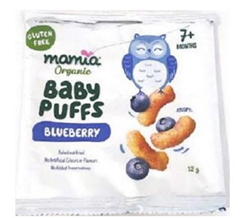
Hampden “Puffs” product | Aldi “Puffs” product |
 |  |
 |  |
 | 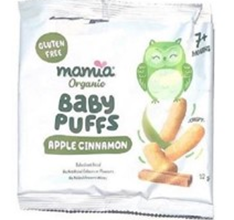 |
More importantly, the Court’s analysis focused on the cumulative arrangement of visual features. In relation to the successful “Puffs” claims, Moshinsky J identified a combination of elements, including:
- a small oval-shaped cartoon character with a light-coloured belly
- a solid white background
- a two-column layout
- rounded childlike font
- vertically stacked text elements
- product and ingredient photography on the right
- a number in the upper-right corner (at [180]).
Considered together, those features were held to involve sufficient creativity and originality to constitute a substantial part of the applicants’ artistic works (at [181]). Importantly, the Court rejected Aldi’s submission that the applicants were impermissibly seeking to protect an idea or the overall ‘look and feel’ of their products. Instead, Moshinsky J held that the cumulative design elements constituted protectable forms of expression (at [182]).
Hampden is significant because of the Court’s willingness to find infringement where the alleged dupe reproduced a sufficiently distinctive combination and arrangement of original visual elements embodied in the packaging artwork – it does not suggest that copyright protects a general packaging ‘aesthetic’ or a market-facing ‘look and feel’ in the abstract.
The unsuccessful “Non-Puffs” claims are also an interesting and equally instructive counterpoint. Although Aldi’s packaging for its “Non-Puff” products (including rice cakes and fruit bars) reproduced some elements of the applicants’ designs, including a solid white background, a rounded childlike font, and a number in the upper-right corner, the Court held that those similarities were too commonplace and lacked the necessary qualitative significance when assessed cumulatively (at [198]). Where the “Non-Puffs” works diverged from the applicants’ works in key respects (for example, by using a much larger owl character rather than a small oval-shaped cartoon, and by lacking a clear two-column layout), the qualitative threshold for substantiality was not met (at [197]).
This aspect of the judgment is a useful reminder that copyright has limits in this space. Not every clean white background, rounded font, cartoon device or broadly child-friendly packaging concept will amount to protectable expression.
While Hampden is a timely example, the broader principle is not new. Seafolly Pty Limited v Fewstone Pty Ltd (2014) 106 IPR 85 (Seafolly) remains a useful illustration of the way copyright can operate where a defendant uses the claimant’s products as design references and reproduces a substantial part of the artistic work embodied in them. The case concerned three artistic works used on Seafolly’s swimwear - being the English Rose, Covent Garden and Senorita artworks - and allegations that Fewstone, trading as City Beach, had infringed copyright by reproducing those works on its own beachwear garments. The Court accepted that copying framework and found infringement, granting relief including damages, injunctions and delivery up.
The facts in Seafolly are interesting because they reveal a pattern of conduct closely analogous to the ‘benchmarking’ practice in Hampden. City Beach conceded that it used Seafolly garments bearing the relevant artworks as “inspiration” to instruct its designers (at [18]). Dodds-Streeton J found that City Beach’s design subcontractor “interpreted, justifiably in the light of the exchanges, the respondent’s request for a Rosette print as requiring ‘a Seafolly knock off’” (at [154]). When the design contractors raised concerns about the similarity between the draft designs and the Seafolly originals, City Beach ignored repeated caveats. The external designer asked City Beach to “accept responsibility” if the rose print were “too close” to Seafolly’s (at [159]). When a City Beach director was asked to accept that responsibility, he refused, claiming the company did not want a print resembling Seafolly’s, but the evidence clearly established otherwise (at [161]).
For present purposes, Seafolly is valuable because it reinforces the same strategic point as Hampden: where the defendant’s conduct moves beyond taking inspiration from a trend and into reproducing a substantial part of original commercial artwork, copyright may provide a much more precise cause of action than a general complaint about resemblance. It also demonstrates that Australian courts have long recognised that artistic works used on products - including textiles, prints and other applied commercial artwork - are capable of meaningful copyright protection.
Trade marks
In many dupe disputes, trade mark rights will remain central. But they do not solve every dupe problem, and brand owners can make a category error if they assume that any commercially effective lookalike must involve trade mark misuse.
Trade marks are at their strongest where the alleged dupe takes or approximates a true badge of origin: a name, logo, device, composite label or other feature that actually functions to distinguish one trader’s goods from another’s. In those cases, the analysis remains familiar. The difficulty is that many modern dupes are designed to avoid precisely that kind of taking. The retailer uses its own house brand, its own sub-brand, or otherwise prominent alternative branding, while borrowing only those aesthetic or structural cues that sit adjacent to, rather than within, the registered indicia.
That is one reason the Moroccanoil litigation remains useful in this context. Although the case involved significant trade mark questions, it also demonstrates the limits of using trade mark and confusion-based theories to attack a product that is plainly intended to evoke a market leader, but does so while maintaining enough distance from the relevant badge of origin. In practical terms, many dupe disputes are not really about the taking of the mark at all. They are about the appropriation of market-facing aesthetic value that sits just outside it.
The High Court’s recent decision in Bed Bath ’N’ Table Pty Ltd v Global Retail Brands Australia Pty Ltd [2025] HCA 50 (BBNT), while not a ‘dupe’ case, provides important clarification. The Court unanimously reaffirmed that trade mark infringement and ACL claims are distinct and non‑coterminous. Trade mark analysis is confined to the mark and its use, whereas ACL and passing off claims involve a broader, fact‑specific inquiry in which reputation and context are central.
Accordingly, the absence of deceptive similarity for trade mark purposes does not preclude a finding of misleading or deceptive conduct under the ACL (at [7], [37]-[45]). The Full Court had erred by importing a trade mark‑style analysis into the ACL inquiry, an approach the High Court rejected in favour of assessing the overall conduct in its commercial context. BBNT thus confirms that Australian law protects established legal rights, particularly reputation and source‑signalling conduct, rather than providing a general prohibition on commercial imitation.
The practical lesson is that brand owners should think carefully about what their trade marks are really doing. If the distinctive commercial value lies in a name or logo, a trade mark strategy may be sufficient. But if much of that value lies in packaging structure, graphic arrangement, recurring visual architecture or other design choices, ‘traditional’ trade marks alone may not capture the real source of vulnerability. One possible avenue is shape trade mark protection. But shape marks remain notoriously difficult to establish in Australia because the applicant must show the shape itself operates as a badge of origin, rather than merely as an attractive or functional product design.
A practical dupe-response playbook
Practically speaking, the cases discussed demonstrate that dupe disputes should not be approached as though they all present the same legal problem. A better first step is to ask a more exact question: what, precisely, has been copied?
The answer to this question, along with the following considerations, will determine which legal right is engaged, and whether there is a viable claim on foot:
- Deception or imitation: firstly, distinguish whether the complaint is truly about deception, or instead about imitation. If the real grievance is that the competitor has captured the original’s commercial aesthetic while remaining recognisably its own product, ACL and passing off may be only part of the answer.
- Subject matter: secondly, identify the subject matter with precision. Is the complaint about product shape, packaging artwork, label graphics, layout architecture, illustration, product photography, a logo, a composite mark, or some combination of those things? The more clearly the copied subject matter can be identified, the more likely the analysis will move from an unhelpful complaint about “overall resemblance” to a claim grounded in an actual legal right.
- What rights are available: thirdly, build those rights before the dupe appears. Hampden is a good reminder that authorship and chain of title are very important (see discussion of proof of assignment at [141]-[154]). Where agencies, freelancers or external designers are involved, assignments and ownership documentation are critical parts of brand protection. Separately, although relatedly, ask whether careful records have been kept of all marketing materials related to your product/s in order to establish the product is well-known enough for ACL / passing off protection to arise. Many of these cases turn significantly on factual findings about reputation, market usage and conduct.
- Evidence of Intention: fourthly, assume that internal benchmarking documents may one day become exhibits. Design briefs, side-by-side comparison decks, comments that a proposal is “too close”, and instructions to “follow the architecture” of a competitor’s packaging can be highly damaging. The High Court in BBNT endorsed the relevance of intention (including “willful blindness”) as an evidentiary factor informing the objective assessment of conduct, without requiring proof of dishonesty (at [49]-[51]). In a close case, those documents may affect not only liability, but also flagrancy and additional damages.
- Remedies: finally, match remedy to a right. A vague complaint that a product feels too familiar is often a poor basis for correspondence or urgent relief. A targeted claim identifying the relevant copyright work, registered mark, design right or specific misleading representation is far more likely to generate leverage.
Conclusion
The modern dupe is not necessarily unlawful because it is a dupe. Australian law remains reluctant to punish copying in the abstract, particularly where consumers understand they are buying a cheaper alternative and the defendant has taken care to distinguish trade origin.
But that does not leave brand owners without recourse. The critical question is whether the copycat has taken something the law recognises as protectable: a badge of origin, a registered right, or a substantial part of original creative expression. Cases such as Hampden and Seafolly show that, where the dispute is framed with sufficient precision, copyright may do real work in a modern dupe case. The Full Court decisions in Hampden and Bodum will no doubt inform our understanding of the law in this space.
For brand owners, the lesson is both cautionary and empowering. Not every dupe will be actionable, and the instinct to allege deception may lead to disappointing results where the consumer may not be found to have been misled. However, where the complaint can be anchored to specific protectable subject matter, and particularly to copyright in original packaging artwork or applied commercial designs, the legal position may be significantly stronger than a general appeal to commercial unfairness would suggest. In the age of the ‘lawful-ish’ dupe, the strongest enforcement strategy is to know exactly what has been copied, and to build a portfolio of rights before the market tests how close a competitor is willing to sail to the wind.