Key learnings from the last quarter of the new regime (further to the report on the first quarter) are:
- Continued frequent use of waivers: merger parties continued to make frequent use of the waiver process in the last quarter, with waivers outnumbering full notifications almost two to one (178 to 95), for a total of 286 and 158 this financial year according to the Australian Competition and Consumer Commission's (ACCC) data. Many focused on local acquisitions (pubs, hotels, liquor, restaurants, supermarkets, vets, car dealers) as well as broader software and computer services, finance and insurance and manufacturing sectors. The ACCC continues to deal with these relatively quickly, meeting its key performance indicators (KPIs) in doing so with a median processing time of 13 business days. In G+T’s experience, more recent waivers have taken closer to 15 days, which we understand reflects the high volume of waivers. With 14 waivers denied in the first six months (triggering parties to either make a full notification or withdraw), the ACCC has made clear that the process is only appropriate for transactions that plainly do not raise competition concerns, where data is objectively verifiable, and can be dealt with ‘on the papers’ without the need to issue any information requests to the merger parties or consult with third parties.
- Pre-notification takes at least three weeks even for relatively simple mergers, and up to two or more months for more complex deals: the ACCC has reported that the median period for pre-notification engagement is 12 business days. The pre-notification process has proved relatively flexible in practice, with ACCC case teams prepared to work closely with merger parties to refine the notification and ensure the ACCC has all the information it needs before the transaction is formally notified and the Phase 1 clock begins. For multi-jurisdictional matters, the ACCC has shown an interest in receiving documents and materials prepared for other competition regulators reviewing the transaction where there is overlap in the issues under consideration in Australia. This regularly includes the set of internal documents filed in the US under the Hart-Scott-Rodino (HSR) Act, where applicable. Pre-notification may also include remedy discussions where the parties propose to offer a remedy in Phase 1, which will add time to the pre-notification phase, but make for a more efficient Phase 1.
- Uptick in Phase 2s as more mergers work their way through the review system: at the end of the first quarter (Q1), we reported that two transactions had been referred for a Phase 2 review. A further four transactions were referred to Phase 2 in the second quarter (Q2) (and another three were referred just after the reporting period). A total of eight Phase 2 referrals commenced in 2025–2026, with an additional Phase 2 referral on 18 August 2026. The threshold for the ACCC referring a matter to Phase 2 is whether it ‘could’ substantially lessen competition in a market, a considerably lower threshold than the substantive test for opposing a merger (which is whether the transaction ‘would’have the effect or likely effect of substantially lessening competition (SLC) in a market).
- Negotiating Phase 1 remedies is challenging: the relatively low threshold for Phase 2 referral described above means that merger parties hoping to negotiate a Phase 1 remedy and avoid a Phase 2 may need to offer a more extensive remedy than may ultimately be required to ensure the transaction would not SLC. This is because merger parties are essentially required to resolve the ACCC’s concerns set at the ‘could’ SLC threshold, rather than the ‘would’ threshold in the substantive test. There are timing and process challenges too: remedies can only be offered up to Day 20 of the timetable, but the nature and extent of the ACCC’s concerns only become clear after receipt of the Phase 1 issues letter around Day 18. Merger parties either need to be able to work very quickly to negotiate a remedy with the ACCC in two business days (which is generally unrealistic) or seek to extend the timetable to allow more time to negotiate (which would be in addition to a potential 15 business day extension the ACCC can invoke to allow itself more time to consider the remedy proposed). Nevertheless, it is possible to achieve this – two recent transactions (Heidelberg / MAAS and Black Rhino / Club Hotel Motel Roma) were approved in Phase 1 subject to divestiture remedies.
- First contentious Phase 2 matter was cleared subject to conditions: the ACCC cleared the Ampol / EG Australia retail fuel merger subject to conditions in June, marking the first complex Phase 2 to be cleared with remedies. Ampol was required to divest 41 retail fuel sites across Australia to an ACCC-approved purchaser. Ampol initially offered to divest 19 sites across Australia but increased it to 41 sites during the ACCC’s Phase 2 assessment. The ACCC considered the likely competitive effects of the acquisition in the markets for the retail supply of petrol and diesel in local markets in which Ampol and EG Australia both have retail sites, as well as in metropolitan-wide markets in Adelaide, Brisbane, Canberra, Melbourne, Perth and Sydney. Further details are available here.
- First matter opposed under the new regime: the ACCC opposed one transaction within the first six months of the new regime, blocking Coles’ proposal to lease a vacant site in Kalgoorlie. The decision shows the expanded reach of the new regime which applies not only to share and business acquisitions but also to a broader range of assets and legal interests, including leases, and requires notification of all acquisitions by major supermarkets. Transactions of this kind were unlikely to be notified under the previous informal clearance process.
- This matter is also significant because it is the first ACCC merger decision (under both the old and current regime) in which the ACCC’s theory of harm concerns the likely exit of a rival following a proposed addition of capacity via acquisition of a lease and development of a site that isn’t currently used as a supermarket. This potentially signifies increasing reliance on the new "creating, strengthening and entrenching market power" concept in ACCC decisions to come. The decision emphasises the limited growth anticipated in Kalgoorlie and concerns that the likely exit of the rival would have an impact on consumer choice, as local consumers would likely lose a differentiated local offer. The ACCC’s Statement of Reasons is the first of its kind under the new regime and is considerably more detailed than prior Public Competition Assessments under the old merger regime.
- The decision also demonstrates that the ACCC will use its dedicated powers to scrutinise competition in sectors of interest. Major supermarkets are a clear example and must notify certain acquisitions or leases of vacant land above a certain size, even where the monetary thresholds are not met. The Government has previously indicated that the ACCC may be given similar specific review powers in other sectors, including transactions involving private equity firms.
- Second matter opposed under the new regime: Subsequent to the 2025–2026 reporting period, the ACCC has also opposed MicroStar/Konvoy. The ACCC was concerned that MicroStar acquiring the assets of Konvoy (which has been in receivership since March 2025), the only other provider of keg pooling services in Australia, would be likely to SLC in the supply of keg pooling services in Australia. The ACCC considered it was not sufficiently likely that a new competitor would enter in a timely and sufficient way to meaningfully constrain MicroStar from increasing prices or reducing the quality of its services post-acquisition. Even though Konvoy’s assets may ultimately be liquidated, the ACCC considered there is a real prospect of the business being acquired by an alternate buyer and continuing under new ownership.
- More changes on the horizon: The ACCC and Treasury have worked collaboratively with the business community to refine the new regime, which has continued to evolve during its first six months. Most recently, the Government announced proposed changes to the legal consequences of failing to notify. Under the current position, a notifiable transaction that is not notified is automatically void. This has caused concern given the breadth of transactions potentially captured by the regime. The proposed changes would instead make such transactions voidable where the ACCC seeks court orders, which should provide parties with greater comfort when considering borderline transactions where the technical application of the regime is unclear.
- Most deals are getting cleared relatively quickly: Of the 362 notifications and waivers which have been finally considered by the ACCC, 345 resulted in either a waiver being granted or Phase 1 approval. Waivers were approved in an average of 13.4 business days while notifications in Phase 1 took an average of 20.1 business days.
Below we set out further statistics, analysis and insights on the new merger regime and the ACCC’s role during the first six months since the regime became mandatory on 1 January 2026. We also include insights on additional developments since the reporting period.
Number of notifications and waivers
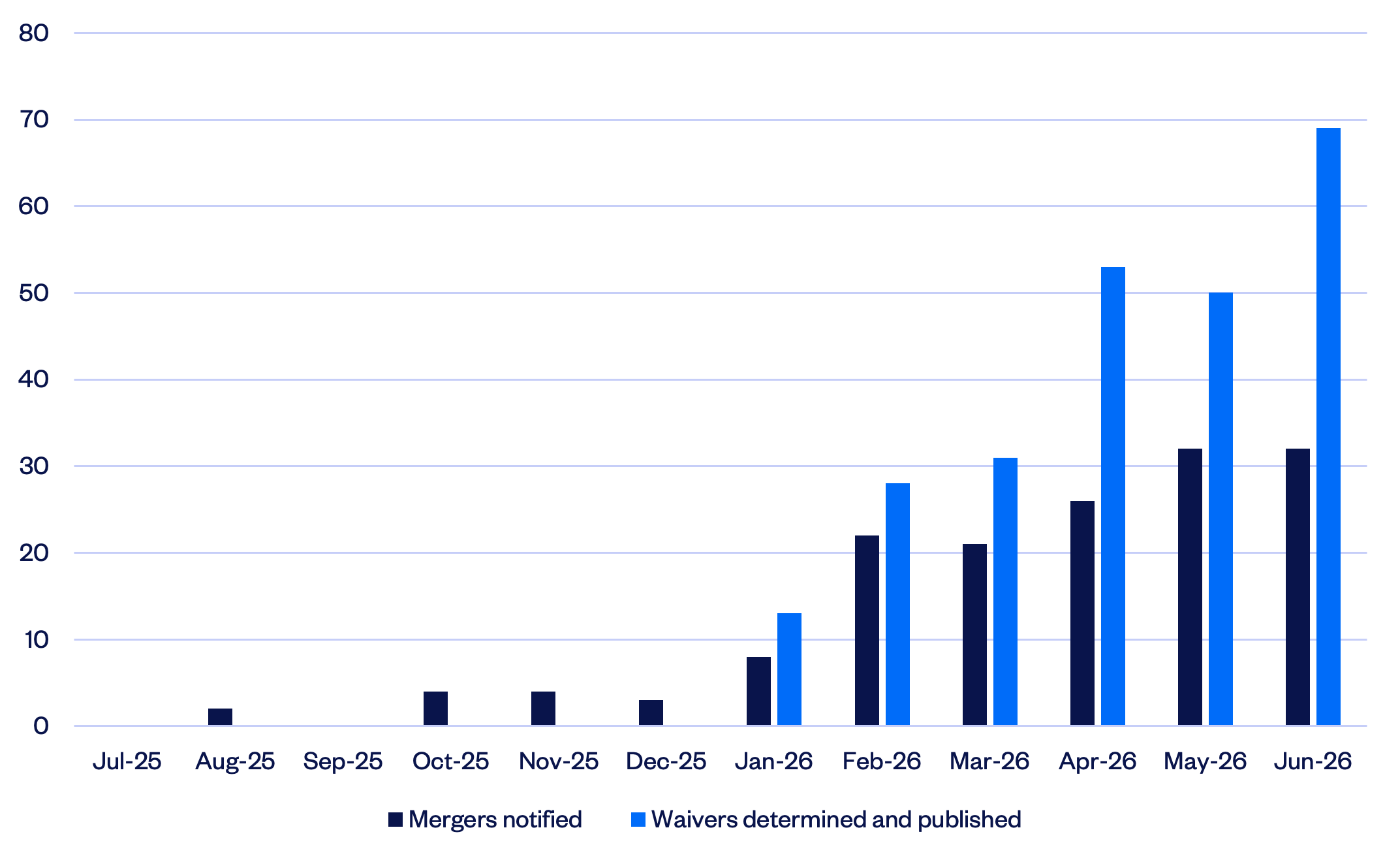
In the first half-year since the new merger regime became mandatory on 1 January 2026, 143 merger notifications were lodged and 244 waiver applications (almost double the number of notifications in the same period last year) were received and determined by the ACCC (this does not include notification waiver applications that were still under consideration or ceased at the end of the relevant period). As shown in Graph 1a below:
- The use of waivers significantly exceeds notifications and significantly increased in Q2 as compared with Q1 of 2026.
- There has also been a steady increase in the number of mergers notified compared with 2026 Q1.
Graph 1a: Number of notifications and waiver determinations
Numbers of mergers notified and waivers determined under the new merger regime, by month
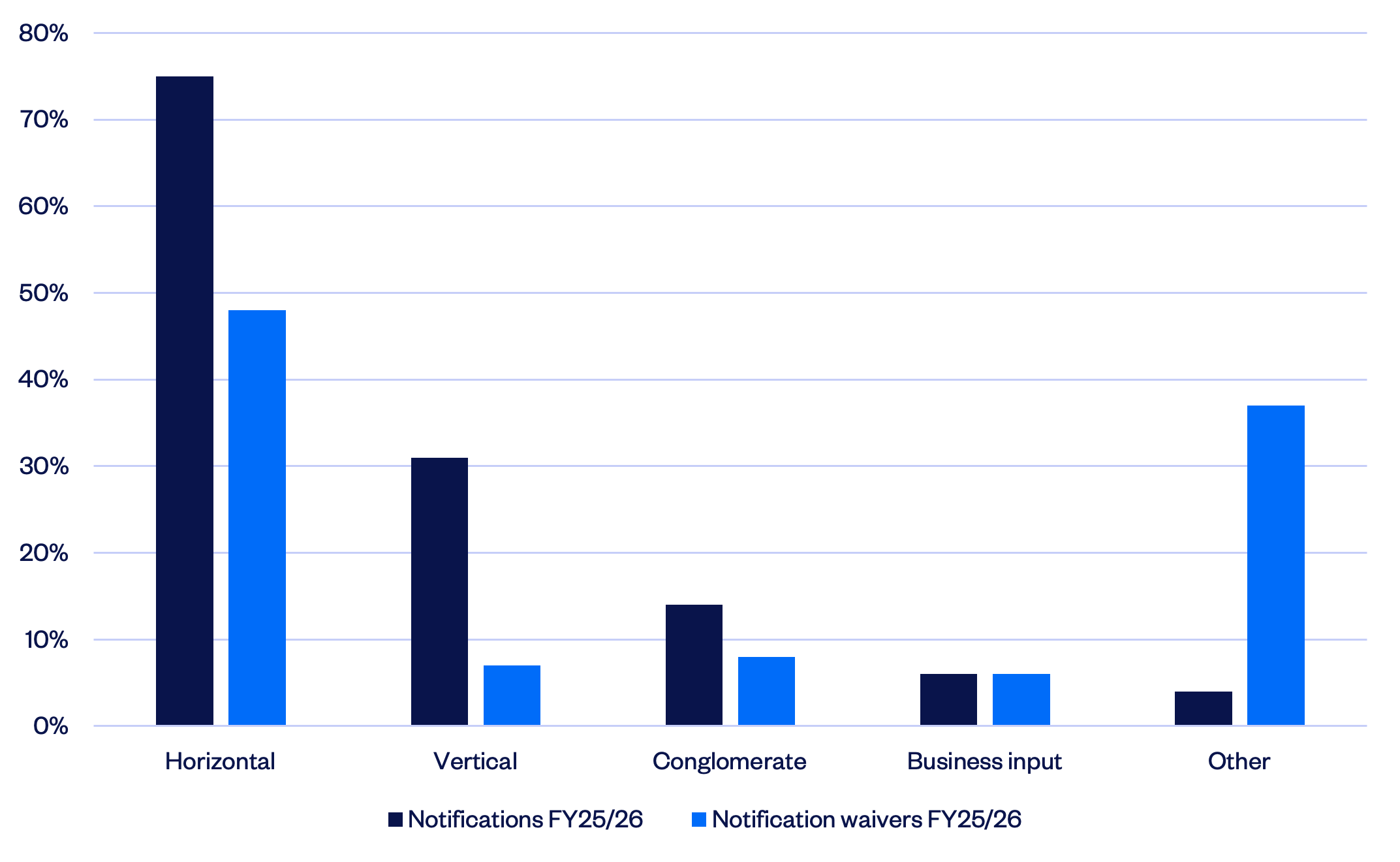
According to the ACCC, most notifications and notification waiver applications were horizontal acquisitions, as shown in Graph 1b below.
Graph 1b: Types of acquisitions
Types of acquisitions (FY25/26)
Notifications – numbers, outcomes and timeframes
During the merger reform consultation process, the ACCC said it expects:
- About 80% of mergers to be cleared within 15 to 20 business days. It has met this expectation, having assessed 92% of notification and notification waiver determinations within 20 business days.
- To be able to identify and raise any issues material to its Phase 1 assessment with the notifying party, including those raised by third parties, as soon as practicable and generally no later than business day 18 (ACCC merger process guidelines, December 2025, paragraph 6.21).
As summarised in Table 1 and Graph 2 below, of the 158 notified mergers in 2025–2026 (including voluntary and mandatory notifications but excluding waiver applications):
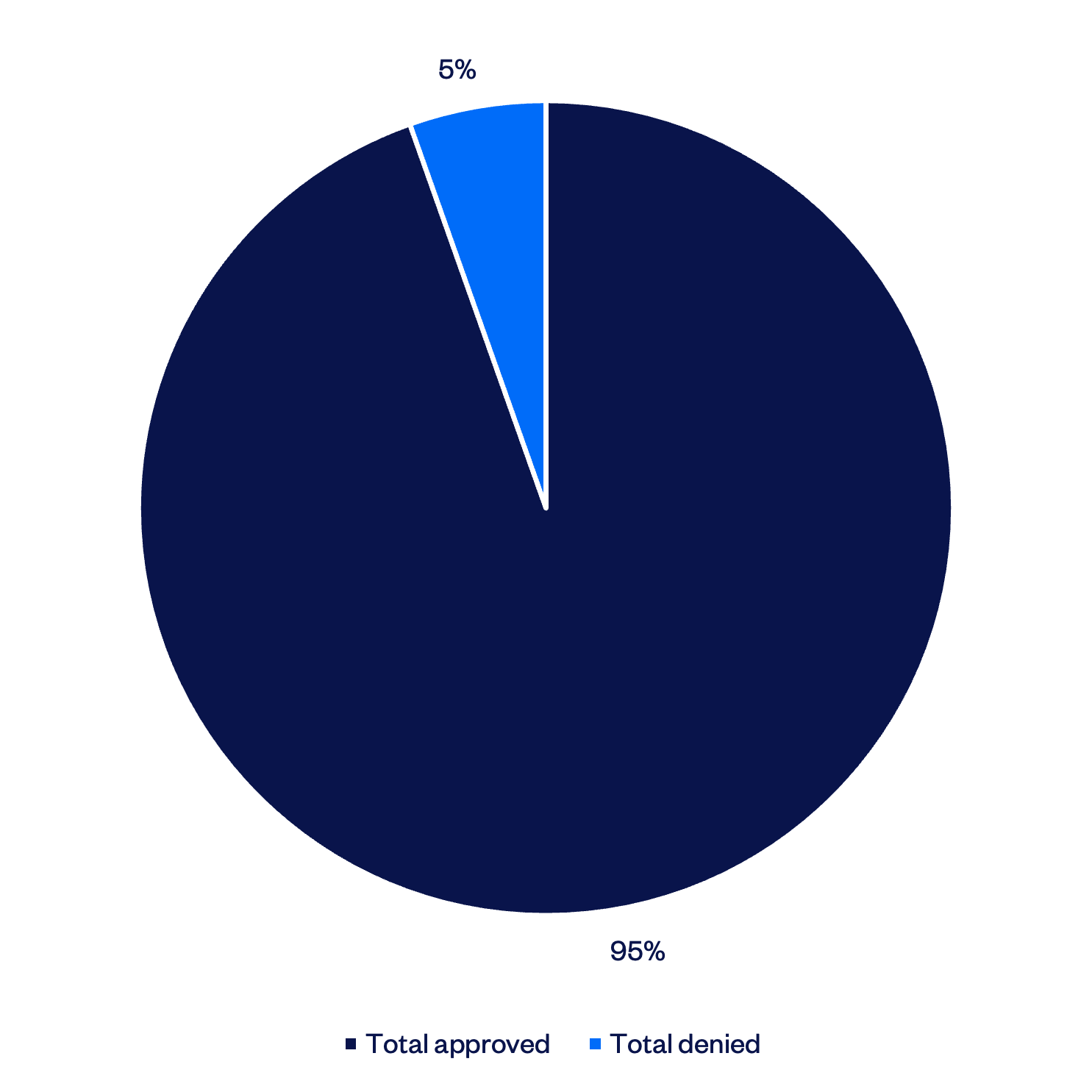
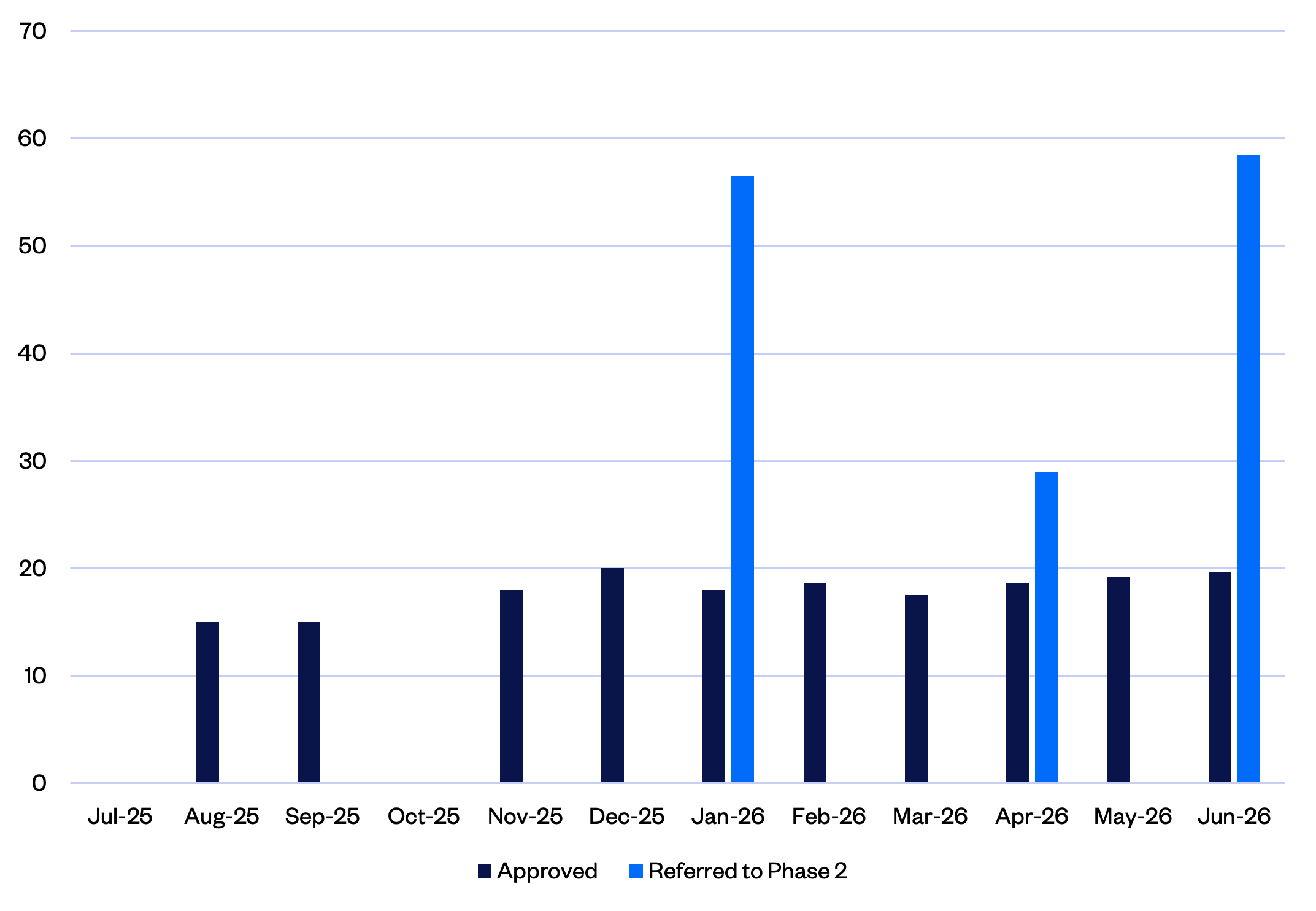
- 115 (95% of completed notification determinations) were cleared in Phase 1, at an average of 18.5 business days (less than the average of 20 business days in Q1 and less than the average of 20.01 business days across all matters, including those that have been referred to Phase 2).
- Six (5% of completed Phase 1 determinations) were referred to Phase 2 in 2025–2026 (noting another three matters have since been referred to Phase 2 outside of this reporting period), after being reviewed in Phase 1 at an average of 48 business days. Of these matters referred to Phase 2, one was opposed within the reporting period (Coles – supermarket site in Kalgoorlie), another was opposed after the reporting period (MicroStar/Konvoy), one was cleared subject to conditions (Ampol – EG Australia), another assessment was ceased within the reporting period (Peter Warren – Wakeling Automotive) and another assessment was ceased subsequent to the reporting period (Trescal / TR Calibration). The remaining four are still under review in Phase 2 (Insurance Australia Group/RAC Insurance, Saipem / Subsea7, Zoetis / Neogen and Vets Central / Hills Veterinary Centre).
- None have been referred to the Public Benefits Phase.
Table 1: Notifications statistics
Notification statistics | 2025–2026 (voluntary and mandatory notifications) |
Total number notified | 158 |
Total cleared in Phase 1 | 115 |
Total pending in Phase 2 | 3 |
Total cleared subject to conditions | 1 |
Total opposed | 1 |
Total ceased assessments | 1 |
Average length of Phase 1 | 20.01 business days |
Median length of Phase 1 | 17 business days |
As shown in Graph 2 below, of completed notification determinations so far, 95% have been cleared in Phase 1.
Graph 2: Outcomes of merger notifications (excluding matters pending in Phase 1)
Outcomes of merger notifications (excluding matters pending in Phase 1), 2025-2026
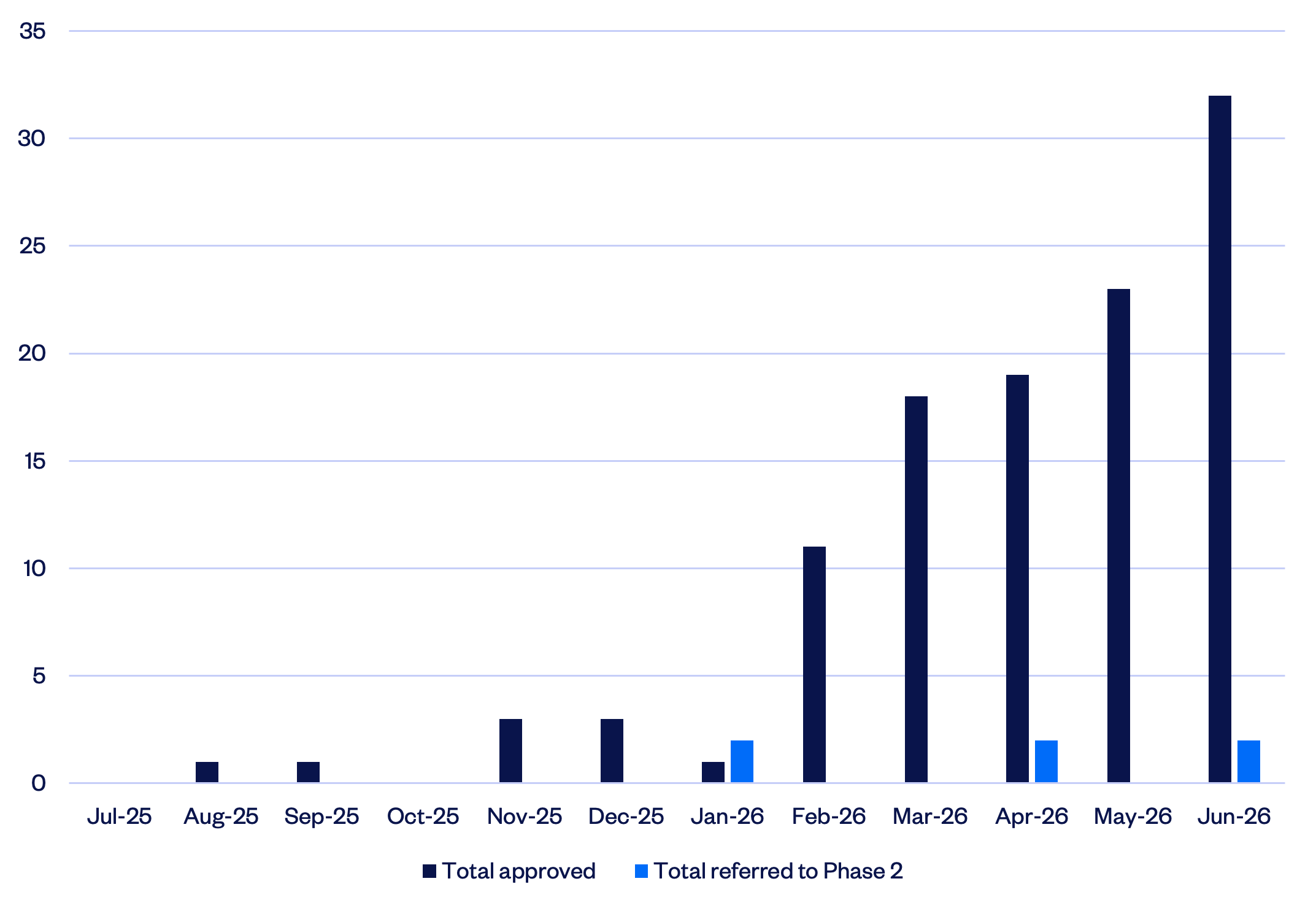
As shown in Graphs 3 and 4 below, the ACCC gained momentum in approving notifications in Phase 1 each month while maintaining fairly consistent review periods for notifications cleared in Phase 1. The average review periods for matters that were ultimately referred to Phase 2 were significantly longer (shown in blue in Graph 4).
Graph 3: Merger notifications – outcomes of Phase 1 review
Merger notifications– outcomes of Phase 1 review (2025–2026)
Graph 4: Merger notifications – average review periods by month
Merger notifications – average review periods by month (2025–2026)
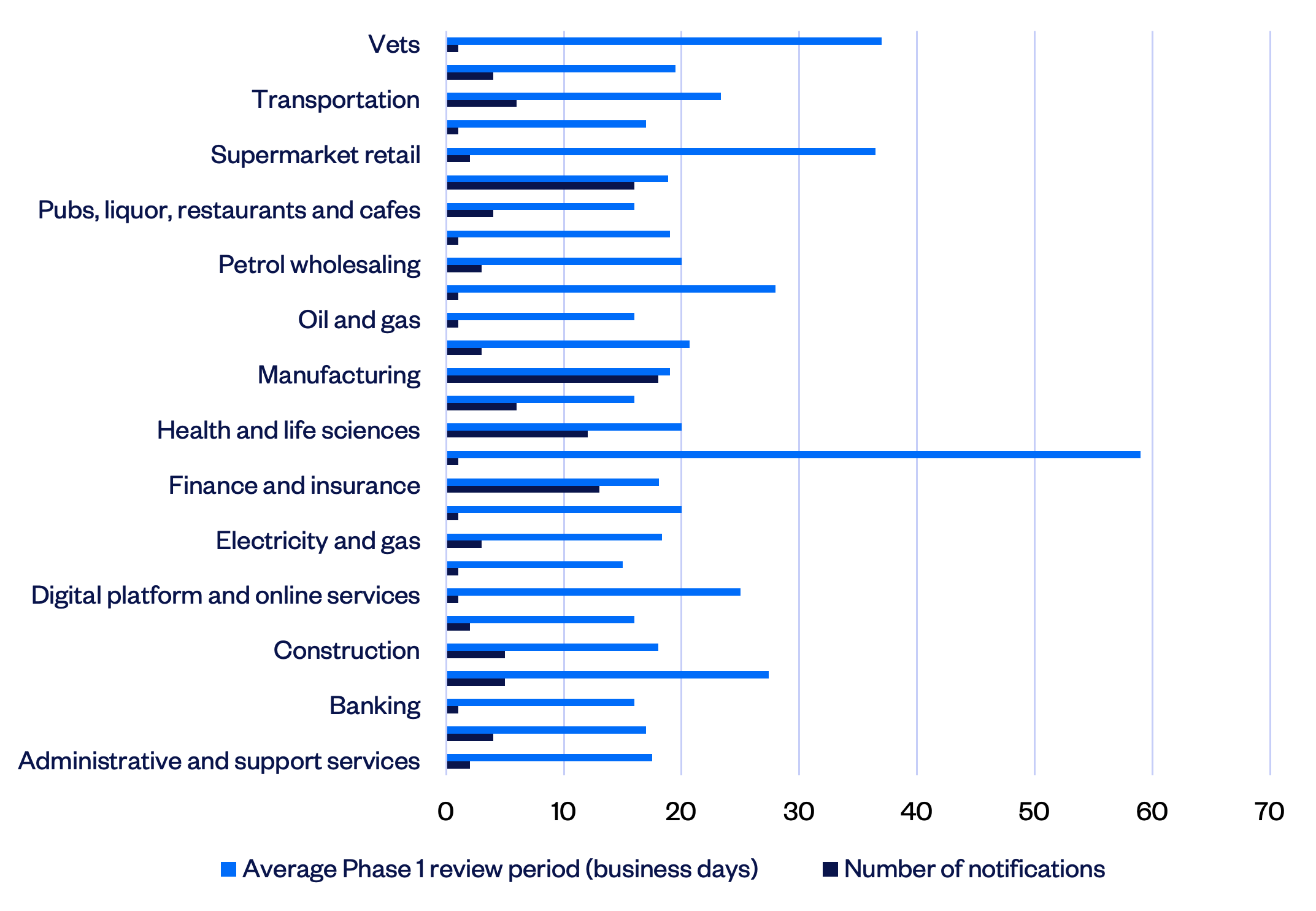
Graph 5: Average review period for Phase 1 and the number of notifications lodged by industry in 2025–2026 (including the voluntary notification transitional period).
Merger notifications by industry (2025–2026)
Matters that were referred to Phase 2
Nine matters have been referred to Phase 2 to date:
- Two have been opposed (Coles/Kalgoorlie and MicroStar/Konvoy), with the latter involving a rejection of a time-limited and behavioural remedy as insufficient to replicate the structural competitive constraint provided by an independent competitor.
- Two have ceased, one because the parties didn’t pay the Phase 2 fee in time (Trescal/TR Calibration) and the other has been refiled with remedies (Peter Warren/Wakeling).
- One has been conditionally cleared (Ampol/EG Australia).
- One is currently under review with behavioural remedies under consideration (IAG/RACI).
- A further three remain pending and remedies have not yet been offered (Saipem/Subsea7, Zoetis/Neogen and Vets Central/Hills Veterinary Centre).
As highlighted in Table 2 below, the ACCC’s analysis for most of the nine matters referred to Phase 2 have focused on theories of harm involving horizontal unilateral effects and the loss of close competitive constraints. The ACCC closely scrutinised transactions in the fuel, supermarkets, car dealers and vets in local markets, focusing on unilateral effects and the creation, strengthening or entrenching of Coles’ substantial market power (Coles/Kalgoorlie), which it ultimately opposed.
Table 2: Matters that were referred to Phase 2
Matter | Industry | Effective notification date | Phase 1 end date | Phase 1 review period | ACCC theories of harm at the end of Phase 1 | Phase 2 end date | Phase 2 review period | Outcome |
Fuel retail | 10/10/2025 | 21/01/2026 | 59 | In local markets:
| 2/06/2026 | 90 | Phase 2: Acquisition may be put into effect with conditions. | |
Supermarket retail | 27/11/2025 | 29/01/2026 | 54 | In local markets, in relation to a new entrant’s expansion (rather than elimination of existing rival):
| 30/06/2026 | 103 | Acquisition must not be put into effect. Coles has applied for Tribunal review and judicial review. | |
Other goods and equipment | 20/02/2026 | 1/04/2026 | 28 | In national markets, removal of the only competitor and creation of a monopoly. On 17 June 2026, Kegstar offered a behavioural s 87B undertaking. | 7/08/2026 | 94 | ||
Finance and insurance | 3/03/2026 | 16/04/2026 | 30 | In national market:
| Pending | Pending | Currently under review in Phase 2. On 1 July 2026, IAG offered a behavioural s 87B undertaking. | |
Cars and vehicles | 5/03/2026 | 2/06/2026 | 63 | In local markets:
| 15/06/2026 | 7 | Consideration of Notification ceased following written request from notifying party.
This was refiled on 14 July with a remedy offer and questionnaire. | |
Health and life sciences | 14/04/26 | 30/06/26 | 54 | In national markets, horizontal unilateral effects in:
| 10/07/2026 | 9 | Consideration of Notification ceased because Phase 2 fee was not paid by due date. | |
Construction | 27/04/2026 | 2/07/2026 | 46 | Horizontal unilateral effects in national market. | Pending | Pending | Currently under review in Phase 2. | |
Agriculture | 12/05/2026 | 17/07/2026 | 25 | Horizontal unilateral effects in national market. | Pending | Pending | Currently under review in Phase 2. | |
Vets | 01/07/2026 | 18/08/2026 | 36 | Unilateral effects (removal of a close competitor, limited remaining competing alternatives, and barriers to entry / expansion) in local market. The ACCC is also considering the cumulative effect of Vets Central’s serial acquisitions. | Pending | Pending | Currently under review in Phase 2. |
Some common themes emerge across these matters:
- Unilateral effects: in every matter, the ACCC's central concern is that the acquisition would remove a direct and significant competitor, enabling the merged entity to unilaterally increase prices and/or reduce service quality.
- Combination of the two largest competitors and loss of close competitive constraint: the ACCC was concerned that Ampol/EG removes geographically closest fuel competitors, Peter Warren/Wakeling combines the two largest and closest new-car competitors, IAG/RACI combines the leading WA insurer with its largest rival, MicroStar/Konvoy removes the only competitor, Trescal/TR removes a direct and significant calibration competitor across multiple domains, Saipem/Subsea7 removes significant competition and Zoetis/Neogen removes a direct and significant competitor.
- Limited remaining competitive constraint post-acquisition: across all matters, the ACCC also expressed concerns that alternative suppliers or competitors remaining post-acquisition would impose only limited competitive constraint on the merged entity.
- Low likelihood of timely new entry or expansion: in each Phase 2 notice, the ACCC identified barriers to entry and/or expansion as a factor supporting the theory of harm. The ACCC consistently found that new entry or expansion is unlikely to be timely or of sufficient scale to constrain the merged entity.
- Risk of price increases and reduced service quality: a consistent concern is that the merged entity would be able to raise prices and/or reduce service quality particularly in fuel retail, insurance, genomics, calibration, keg pooling, car dealerships and services in relation to certain subsea infrastructure (umbilicals, risers and flowlines, known collectively as SURF).
- Local and narrow geographic markets: the ACCC repeatedly flagged the appropriate geographic dimension as a key investigation item for Phase 2, and several matters turned on tightly defined local geographic markets and how far consumers would be willing to travel: fuel (local radii), Kalgoorlie (remote town), veterinary services, the Macarthur region, and potential narrower geographic markets where equipment cannot be transported.
- Protection of smaller and differentiated competitors and customers: the ACCC also consistently focused on theories of harm around protecting consumers and small businesses: differentiated independent supermarkets and localised offerings, smaller fuel retailers/independents, smash repairers and small brewers. The ACCC also often considered harm to specific customer segments: small brewers exposed to price discrimination, and calibration customers needing high accuracy or multi-domain single-source supply.
- Vertical and buyer-power dimensions: beyond the horizontal overlap issues outlined above, several matters raised input-market or buyer-power concerns: IAG's monopsony and foreclosure over smash repairers, and the dealer/servicing aftermarket dynamics (capped-price servicing, warranty lock-in) in Peter Warren/Wakeling.
- Reliance on ACCC market studies and prior reviews: where applicable, the ACCC leaned on its own monitoring and inquiries: the Supermarkets Inquiry in Coles, fuel-market monitoring and price-cycle reports in Ampol/EG, and the prior 2025 informal review in MicroStar/Konvoy.
Some points of distinction in the Phase 2 matters to date:
- New entrant and creating, strengthening or entrenching (CSE) market power: Coles/Kalgoorlie is the only matter where the harm arises from a new entrant's expansion (an over-supply/CSE theory) rather than the elimination of an existing rival. In contrast, the other Phase 2 matters reflect more conventional ‘loss of a competitor’ cases.
- Coordinated effects: Ampol/EG Australia is the only Phase 2 matter so far where the ACCC explicitly considered coordinated effects (though it ultimately focused on unilateral effects in Brisbane, Melbourne and Sydney, while maintaining coordinated effects concerns for Canberra). The other matters focus primarily on unilateral effects under the new regime.
- Cumulative effect of serial acquisitions: Vets Central/Hills Veterinary Centre is the first matter under the new regime in which the ACCC has flagged that it is considering the cumulative effect of acquisitions put into effect by Vets Central during the previous three years. Vets Central acquired Chandlers Hill Vet on 10 July 2023, which is located within 10km of the target site and another vet owned by the acquirer. Separately, Vets Central has also applied for nine waivers to date, and successfully obtained waivers in eight of those. The acquisition for which the waiver was denied is Vets Central/Hills Veterinary Centre, which has since been referred to Phase 2.
- Vertical effects and monopsony power: IAG/RACI is the only Phase 2 matter so far that includes a vertical foreclosure theory of harm, i.e. that the merged entity could restrict rival insurers' access to smash repairers by demanding exclusivity, thereby raising rivals' costs. It is also the only matter in which the ACCC has flagged concerns about monopsony power, i.e. where the merged entity could reduce prices paid to, and quality demanded from, smash repairers in Western Australia.
- Access to data: Zoetis/Neogen is the only Phase 2 matter in which the ACCC is considering data accumulation as a barrier, i.e. that the merged entity's access to an increased volume and breadth of genetic data could raise barriers to entry and impede rivals' competitiveness.
First matter opposed
In deciding that Coles/Kalgoorlie must not be put into effect, the ACCC was satisfied that the acquisition, if put into effect, would, in all the circumstances, be likely to have the effect of SLC in the retail supply of groceries by supermarkets in Kalgoorlie. The acquisition is Coles’ proposal to acquire the lease over land on which it would build a new, second supermarket in Kalgoorlie which would be a large-format, full-line supermarket with an associated liquor outlet. The ACCC was concerned that the acquisition would lead to the:
- Likely exit of an independent competitor: the ACCC came to the view that one competitor is likely to exit the market after the Acquisition and that this would SLC because the supermarket likely to exit has a differentiated offering valued by consumers and its exit would remove a material competitive constraint on Kalgoorlie’s large-format supermarkets.
- Loss of a valued, differentiated offering: the supermarket likely to exit has a differentiated offering valued by consumers, and its exit would remove a material competitive constraint on Kalgoorlie's large-format supermarkets.
- Increased concentration: the likely effect would be to increase concentration, leaving one fewer independent supermarket and removing a competitive constraint on the remaining stores. Coles would then operate two of the four full-line supermarkets, materially increasing its share of selling floor area and revenue, while the combined Coles and Woolworths share of gross lettable area for larger supermarkets would increase from an already high level of 62%.
- Consumer harm: consumers would likely be worse off over time by losing a differentiated local offer, including local products, longer trading hours, higher-touch customer service, and locally responsive pricing and product ranging. The loss of this independent supermarket would reduce (principally) non-price competitive rivalry, lessening pressure on remaining supermarkets to maintain or improve product, service and store quality.
Coles has applied to both the Tribunal for limited merits review and the Federal Court for judicial review of the ACCC’s determination.
Second matter opposed
In deciding that MicroStar/Konvoy must not be put into effect, the ACCC was satisfied that the acquisition, if put into effect, would, in all the circumstances, be likely to have the effect of SLC in the supply of keg pooling services in Australia.
The ACCC was concerned that MicroStar acquiring the assets of Konvoy (which has been in receivership since March 2025), the only other provider of keg pooling services in Australia, would be likely to SLC, and it was not sufficiently likely that a new competitor would enter in a timely and sufficient way to meaningfully constrain MicroStar from increasing prices or reducing the quality of its services post-acquisition. Even though Konvoy’s assets may ultimately be liquidated, the ACCC considered there is a real prospect of the business being acquired by an alternate buyer and continuing under new ownership.
The ACCC was concerned that:
- Monopoly and removal of sole direct competitor: Kegstar and Konvoy are each other’s closest competitor. Konvoy’s entry in 2019 led to vigorous head-to-head competition between the parties, which is still continuing, including substantial price reductions, improved commercial terms and active rivalry for customers. Post-acquisition, Kegstar would become the sole provider of keg pooling services in Australia, removing the only significant source of direct rivalry in the market. The loss of this head-to-head competition would be likely to reduce competitive pressure on Kegstar in relation to price, service quality and commercial offerings to brewers.
- Counterfactual – real prospect of continued competition: even though the parties argued that the relevant counterfactual was Konvoy’s exit from the market, the ACCC considers that, absent the acquisition, there is a real prospect that either an alternative purchaser would acquire Konvoy’s business as a going concern through a rapid and targeted sale process, or that a substantial proportion of Konvoy’s assets would otherwise be realised and deployed in competing keg pooling operations.
- Self-supply unlikely to sufficiently replace the lost competitive constraint: while some larger brewers self-supply kegs and others may have the ability to do so for limited volumes or local distribution, a substantial portion of customers would be unlikely to switch to self-supply due to the significant capital investment, operational capability and ongoing logistical management required.
- Timely and sufficient new entry is unlikely: although kegs and other key inputs are generally available, a new entrant would need to establish the operational capability, reputation and customer base sufficient to compete effectively. The current limited availability of contestable customer contracts, likely customer consolidation post-acquisition, and the challenges of achieving scale make timely and effective new entry unlikely.
The ACCC acknowledged that in a receivership sale process, the acquirer may offer the highest purchase price but this does not displace the competition assessment where the acquirer is the target’s closest competitor. It also noted execution risk is a relevant consideration. The ACCC emphasised that its role is not to determine the most efficient ownership structure for an industry, nor is it to assist receivers in obtaining the highest return for creditors. Rather, the ACCC’s statutory task is to assess the likely competitive effects of an acquisition in accordance with the statutory test.
As at the date of publishing this update, it does not appear the parties have applied to the Tribunal for limited merits review or the Federal Court for judicial review of the ACCC’s determination.
Remedies
So far under the new regime, the ACCC has conditionally cleared three acquisitions: one in Phase 2 and two in Phase 1.
The first conditional clearance was Ampol/EG Australia, which the ACCC approved subject to Ampol to divesting 41 retail fuel sites across Australia to an ACCC-approved purchaser. Ampol initially offered to divest 19 sites across Australia but increased it to 41 sites during the ACCC’s Phase 2 assessment.
The ACCC considered the likely competitive effects of the acquisition in the markets for the retail supply of petrol and diesel in local markets in which Ampol and EG Australia both have retail sites, as well as in metropolitan-wide markets of Adelaide, Brisbane, Canberra, Melbourne, Perth and Sydney. Without the conditions, the ACCC considered the acquisition could have the effect of SLC in the retail supply of petrol or diesel in 39 local markets, where 41 EG Australia sites overlap with Ampol sites.
So far, the ACCC has only accepted divestiture remedies and declined to accept the behavioural remedy offered by Kegstar. This is consistent with the ACCC’s longstanding preference for structural remedies rather than behavioural remedies that might require ongoing monitoring, as reported in the Competition and Consumer insights. The ACCC did not consider that the behavioural s 87B undertaking offered by Kegstar addressed the substantial extent of the competitive harm arising from a significant structural change in the market to a monopoly provider of keg pooling services in Australia. The ACCC said ‘a behavioural and time-limited remedy would not sufficiently replicate the structural competitive constraint provided by an independent competitor.’
In summary, there are eight matters in which remedies have been offered. Of those:
- three have been accepted by the ACCC, all of which are divestiture undertakings: one was accepted in Phase 2 (Ampol / EG Australia – the first remedy accepted by the ACCC), and another two were accepted in Phase 1 (Heidelberg Materials / MAAS and Black Rhino / Club Hotel Motel Roma).
- five involve divestitures, and three of these have been accepted by the ACCC as outlined in the bullet point above. The remaining two are under consideration (Peter Warren / Wakeling Automotive and Kimberly-Clark / Kenvue).
- three are behavioural: one of these matters has been opposed (MicroStar Logistics / Konvoy) and the other two remain under consideration (Insurance Australia Group / RAC Insurance and Journey Beyond / SeaLink Rottnest).
Waivers
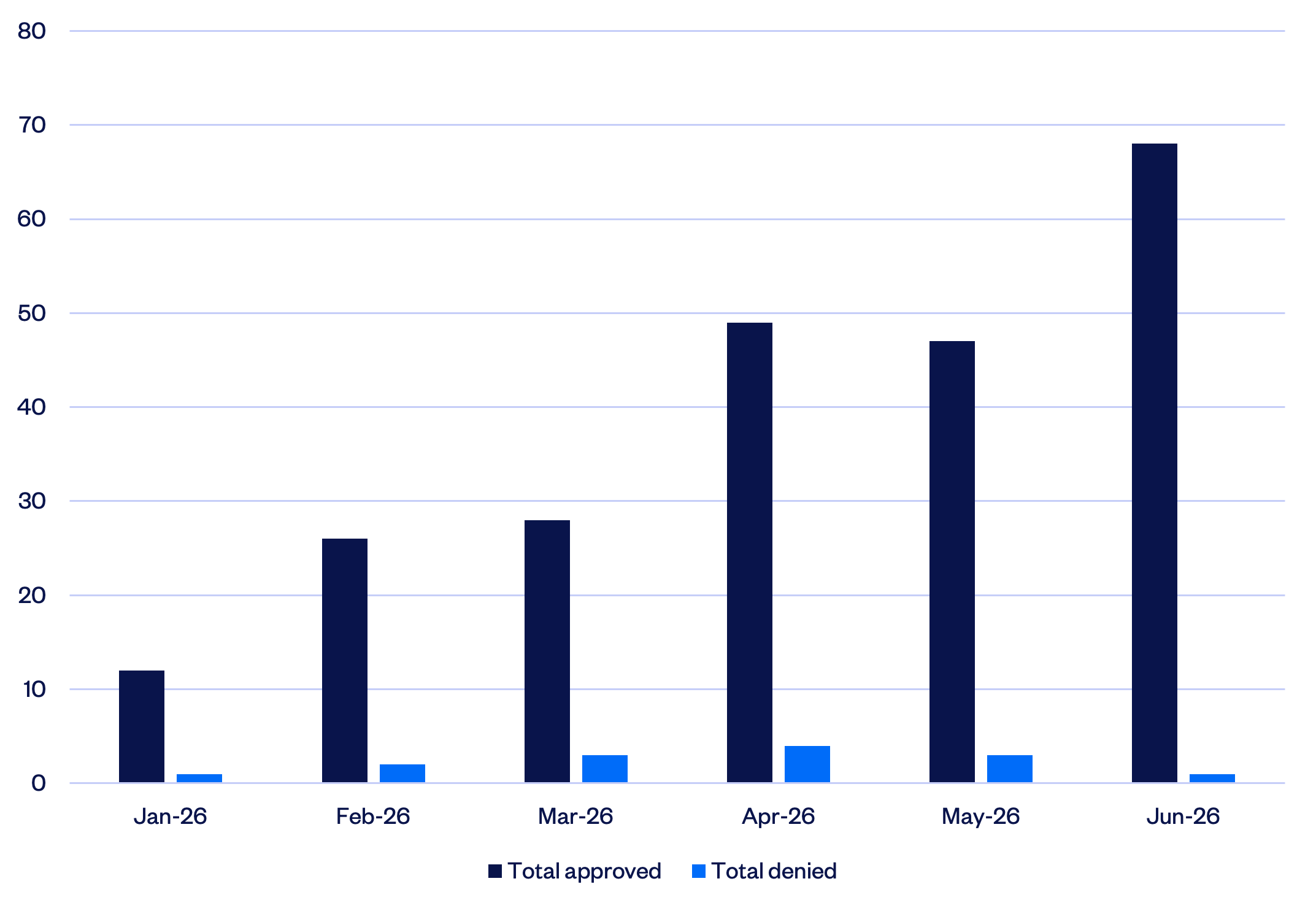
As shown in Table 3 and Graph 6 below, of 244 waiver determinations on 1 January to 30 June 2026, 95% (230) were approved and 5% (14) were denied. This approval rate is slightly higher than the Q1 approval rate of 92%.
Table 3: Waiver statistics
Waivers (noting the waiver process commenced on 1 January 2026) | |
Total determined | 244 |
Total approved | 230 |
Total denied | 14 |
Average length of waiver review period | 13.2 business days |
Median length of waiver review period | 13 business days |
Graph 6: Outcome of waiver determinations
Outcome of waiver determinations (2026 H1)
As shown in Graph 7 below, the number of approved waiver determinations generally increased over the half-year whilst the denials remained quite low, peaking in March and May 2026 then declining.
Graph 7: Waiver determinations – outcomes by month
Waiver determinations – outcomes by month (2026 H1)
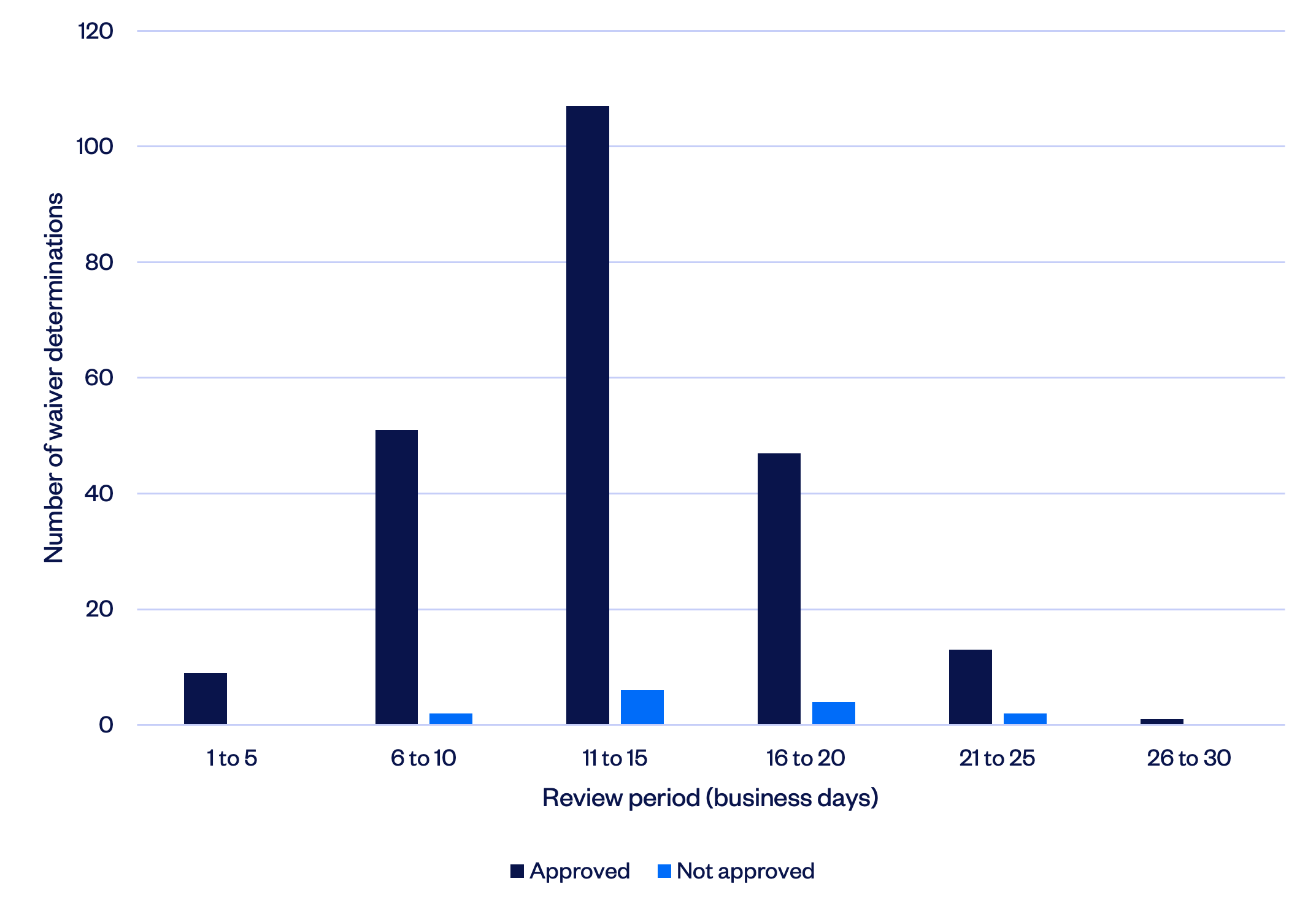
Graph 8: Waiver determinations – histogram of review period
Review period for waiver determinations (1 January to 30 June 2026)
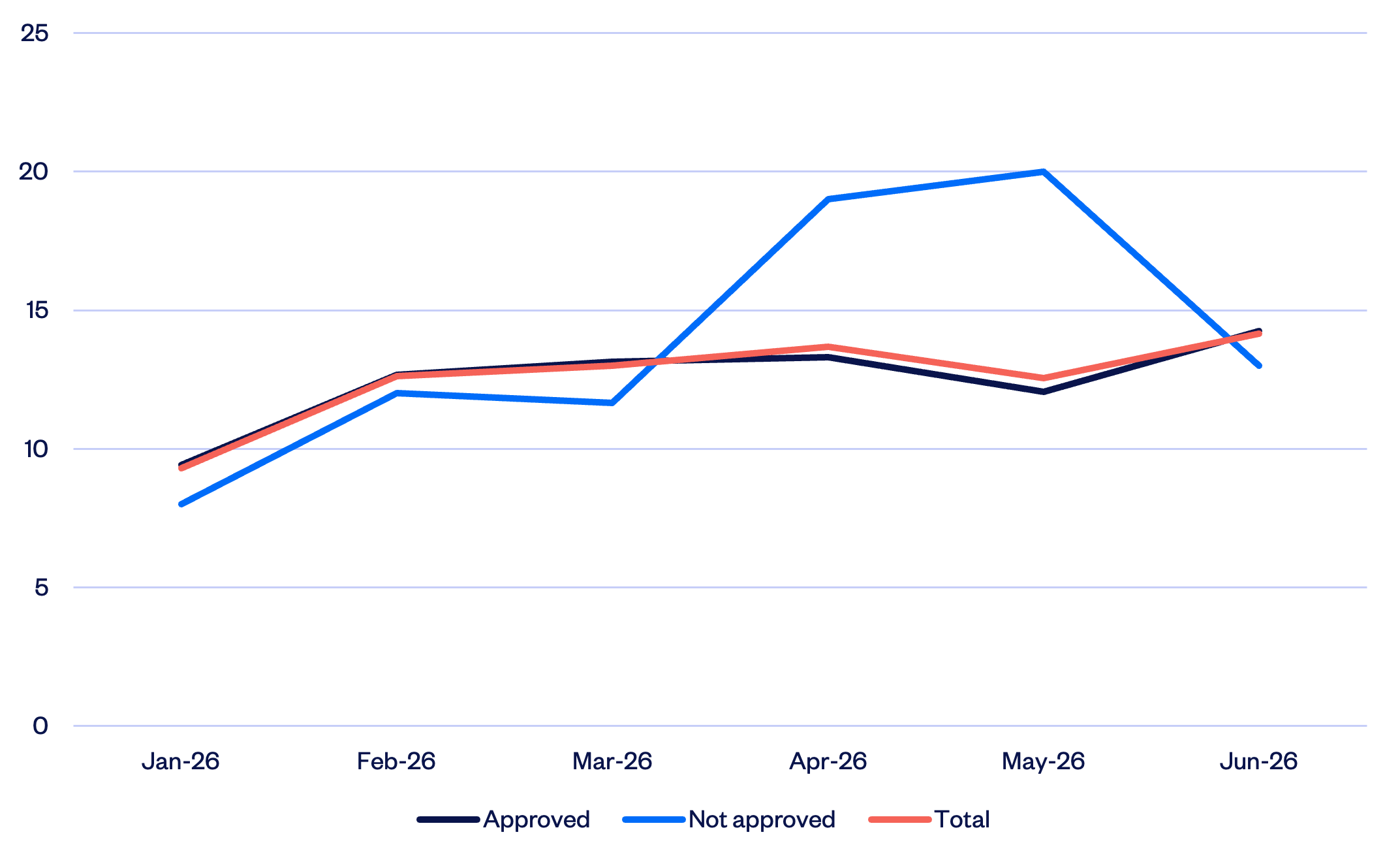
As shown in Graph 9 below, in Q2, the ACCC took on average longer to deny waiver applications than to approve them, with this difference peaking in Q2.
Since 1 January 2026, the ACCC has taken an average of 13.02 business days to approve waiver applications and 15.43 business days to deny waiver applications. Below is a graph showing the distribution of timeframes for waiver determinations in the first half-year since waivers became an option under the merger review regime.
Graph 9: Waiver determinations – average review periods by month and outcome
Waiver determinations - average review periods, by month and outcome (2026 H1)
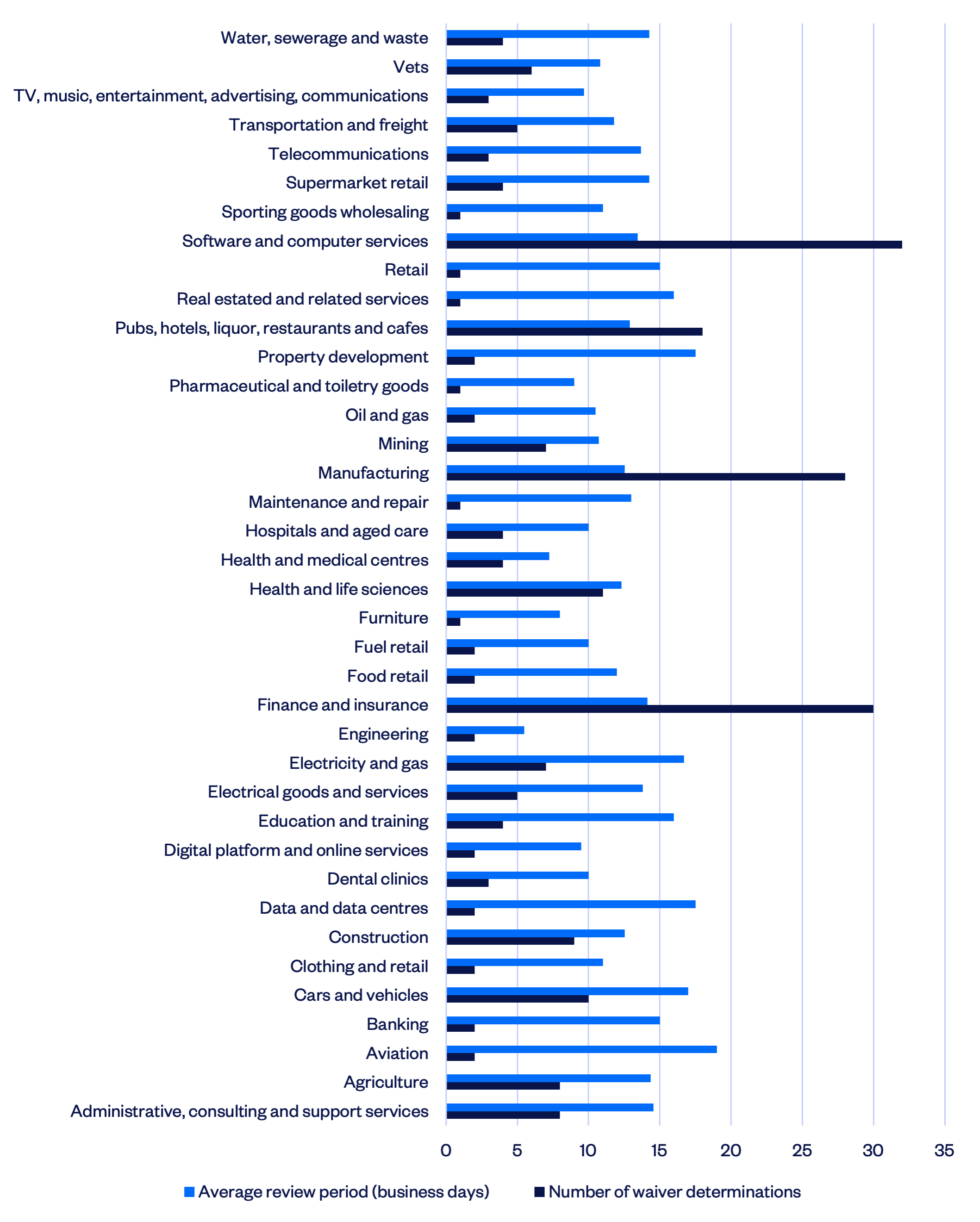
Graph 10: Number of waiver determinations and average review period by industry.
Waiver determinations by industry (2025–2026)
Rejected waivers
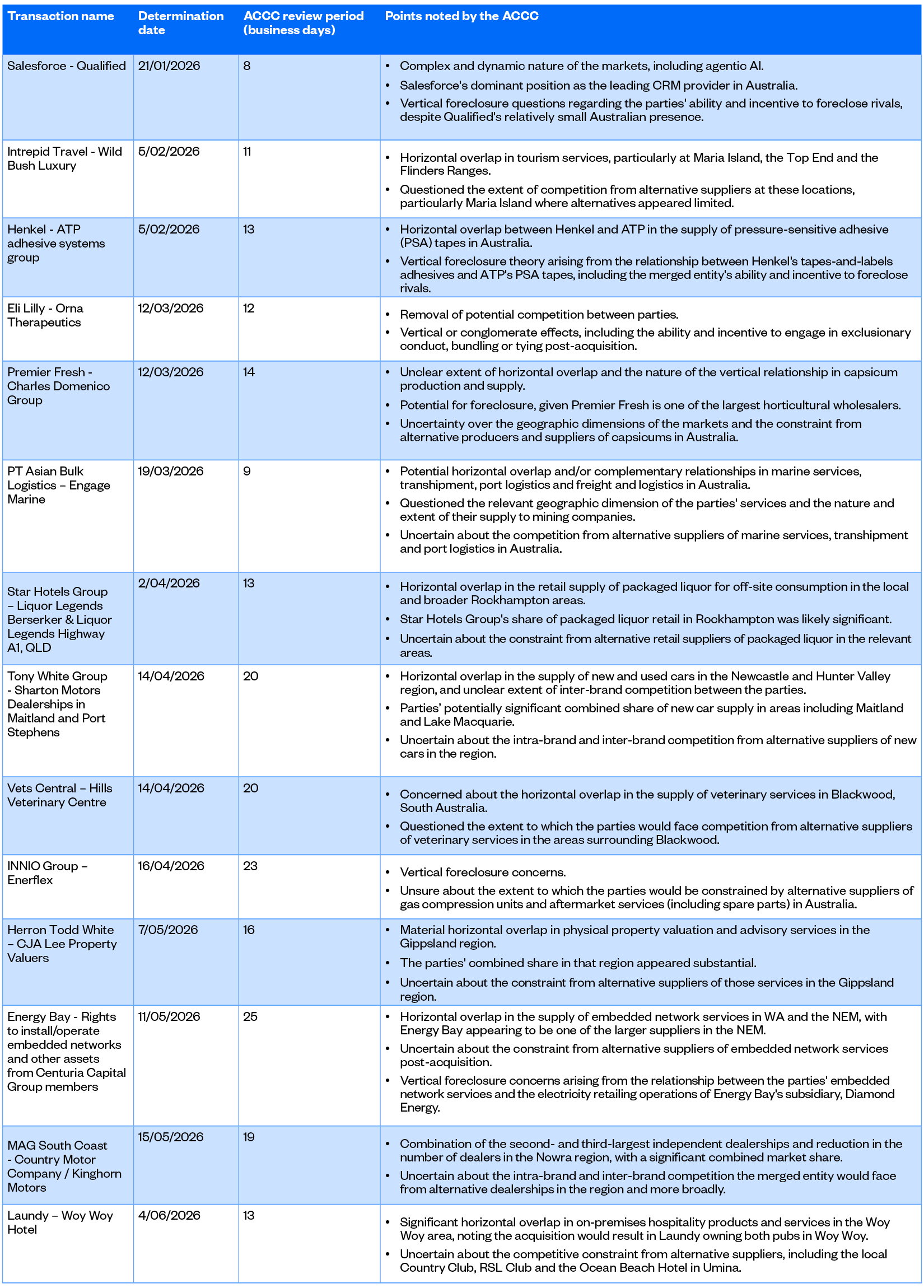
In 2026 H1, the ACCC denied 14 waiver applications. As outlined in Table 4 below, these spanned a handful of industries:
- Car dealerships in local areas: MAG South Coast / Country Motor Company and Kinghorn Motors, and Tony White Group / Sharton Motors (Maitland and Port Stephens).
- Liquor retail and hotels / pubs in local areas: Laundy / Woy Woy Hotel and Star Hotels Group / Liquor Legends (Berserker and Highway A1, QLD).
- Energy and energy infrastructure: Energy Bay / Centuria (embedded networks) and INNIO Group / Enerflex (gas compression/equipment).
- Professional and consumer services: Herron Todd White / CJA Lee (property valuation) and Vets Central / Hills Veterinary Centre (veterinary services).
- Software and computing services: Salesforce / Qualified.
- Health and life sciences: Eli Lilly / Orna Therapeutics.
- Manufacturing and chemicals: Henkel / ATP Adhesive Systems.
- Fresh produce / food distribution: Premier Fresh / Charles Domenico Group.
- Logistics / marine services: PT Asian Bulk Logistics / Engage Marine.
- Travel and tourism: Intrepid Travel / Wild Bush Luxury.
The common themes across these 14 waiver denials are:
- Horizontal loss of competition in local, consumer-facing markets: these concerns were most prominent in the dealership, liquor/hotel, veterinary and valuation matters, where the overlap is locally concentrated and the relevant question is whether the merged entity removes a close competitor in a defined local market.
- Vertical foreclosure / input access: the ACCC noted these issues across energy infrastructure (embedded networks), marine logistics and equipment-supply matters, where the concern is access to an upstream or downstream input or asset.
- Aggregation / creeping acquisitions: the ACCC also noted the roll-up structure of the automotive and liquor matters, potentially giving rise to cumulative-effects concerns that individually small acquisitions can progressively CSE market power.
Table 4: Waivers that have been not approved
As at the date of publishing this update, the ACCC has not denied any waiver applications since 4 June 2026.
Merger reform FAQs and updated ACCC materials
In 2026 Q2, the ACCC updated its merger reform FAQs twice:
- On 24 April 2026, the ACCC added new FAQs:
- If a party received a s189 letter, and the acquisition is put into effect within 12 months of the date of the ACCC’s letter, parties do not need to notify under the merger control regime unless there has been a change in circumstances such that the letter does not apply to the new acquisition structure.
- Parties must identify the sources used to calculate market shares and provide underlying data and supporting documents where available to confirm the calculation. Where datasets are limited, a range of techniques can be used, including industry knowledge of the assets held by rivals or knowledge about contracts/customers won by other players, which can be used to derive revenue (or alternatively, volume or capacity) estimates
- Notifying parties and applicants may pay the lodgement fee from an overseas bank account.
- On 23 June 2026, the ACCC added new FAQs:
- The ACCC encourages users to confirm the payment details via the secure portal when making payments for fees for notifications and notification waivers.
- For notification waiver applications involving private equity firms, parties should provide information about:
- any other funds which are managed or advised by the same private equity firm (or its connected entities) that operate in the same or related markets to the target, including the extent of any potential competitive effects or overlap
- if an applicant claims that certain entities are not a ‘connected entity’ of a party to the acquisition, information should be provided to substantiate why those other entities are not connected entities.
- If the issue of whether the acquisition is a relevant ‘acquisition’ for the purpose of the merger control regime provisions or connected with Australia is not clear, the ACCC generally will consider the notification waiver application. If it clearly does not relate to an ‘acquisition’, then the ACCC will not consider the application and will refund the fee to the applicant.
The ACCC has also indicated that it is working to require the merger reform FAQ updates and incorporate them into ACCC guidance. The ACCC will keep using email alerts and guidance notes to update businesses and advisors.
On 24 April 2026, the ACCC also published:
- Updated notification waiver application form guidance: the updated version of the notification waiver application form and guidance includes links to an updated template for additional parties and market shares. Key changes included:
- Notification waivers: the ACCC provides additional information about its assessment process, noting that notification waiver applications must provide the ACCC with enough information upfront to determine whether to grant a notification waiver in relation to an acquisition without further follow up or investigation, and if the ACCC considers that it cannot grant a notification waiver based on the information provided in the application and taking into account the mandatory factors in section 51ABV(2)(b), the ACCC generally will not grant the notification waiver and the parties to the acquisition will need to notify the acquisition in order to obtain certainty from the ACCC.
- Confidentiality claims: the ACCC additionally clarifies “It is important not to claim confidentiality over information that is not genuinely confidential, or make blanket, unparticularised or unsupported confidentiality claims. Such claims may slow the consideration of applications” and “You must be able to substantiate claims for confidentiality if requested to do so.”
- New Part B for questions answered in document upload: the portal has a new module that enables applicants to upload additional documents. The ACCC also lists optional additional information, including information or data relating to:
- the competitive dynamics or how competition works in the relevant markets
- customers of the parties to the acquisition and where those customers are located
- market shares where the parties to the acquisition operate in related markets or have common customers
- substantiation of claims regarding the state of competition e.g. key facts about tenders that the parties or other key suppliers have participated in
- the parties’ expected completion date.
On 23 June 2026, the ACCC also published a new quick guide for businesses on providing confidential information to the ACCC. In summary, parties can mark confidential information by:
- making a request at the time you provide the information to the ACCC
- clearly and precisely identifying the confidential information by highlighting it in the document. Where that is not possible, clearly mark the document as containing confidential information and use the appropriate confidentiality claims template to specify what information is confidential:
- indicating why each piece of information or document is claimed to be confidential (for example, business or trade secret, personal information, or other). This may be included as brief reasons in a footnote for each piece of information highlighted, or in a separate document (where appropriate, using one of the ACCC’s confidentiality claims templates).
On 20 July 2026, the ACCC updated its payment processes and guidance on the merger forms.
Businesses can now pay the fee for a notification waiver application or notification before formally lodging the form in the ACCC’s acquisitions portal.
The ACCC has also updated its short notification form and guidance, long notification form and guidance, and notification waiver application form and guidance. The charges are largely to align with the ordering of the numbers in the form, along with changes to character limits and additional information that the parties are encouraged to provide.
Looking ahead: further reforms
As reported here, on 2 July 2026, the Government introduced what it has called ‘targeted refinements’ to Australia’s merger regime in Schedule 4 of The Treasury Laws Amendment (Strengthening Accountability for Tax Adviser Misconduct and Other Measures) Bill (Bill) to Parliament. The Bill amends the merger control laws to adjust the legal consequences – from void to voidable – for parties that fail to notify the ACCC of transactions that meet the relevant thresholds. The proposed reforms also clarify the concept of control (including the concept of ‘associates’ and ‘joint control’) and introduce a new mechanism to seek extensions from the ACCC to implement approved acquisitions that have become ‘stale’. As outlined above, the ACCC has experienced a significant uptick in the volume of transactions it has reviewed since Australia’s new merger regime became mandatory on 1 January 2026. If passed, these proposed changes may help reduce the number of no-issues mergers considered by the ACCC, particularly waiver applications.
For further information on how these developments may affect your next transaction, or to explore tools designed to assess whether a deal triggers ACCC notification and streamline early-stage planning, please contact the authors.